





The seller never pulled permits. Now what? A buyer's guide for Massachusetts
A finished basement, an extra bath, a deck nobody permitted. What to check before you buy, what to do if you find it after closing, and the open permit trap.
 Mateus Magno
Licensed Construction Supervisor · November 17, 2026 · 9 min read
You love the house. Then someone says the finished basement, the second bathroom or the deck has no permit behind it. In Massachusetts, that problem usually becomes yours at closing.
I'm a licensed builder in Somerville, and I get this call from buyers before and after closing. Here is how to check before you buy, what to do if you find out later, and how the "open permit" problem works.
Why does the buyer inherit the seller's unpermitted work?
Massachusetts is a "buyer beware" state. In a 2023 Boston Globe explainer on unpermitted updates, a real estate agent says sellers have only a few required disclosures, such as lead paint and septic system information. Sellers do have to answer direct questions truthfully. Once you close, you own the house and its history, including work that never got inspected.
That is why the questions you ask matter. A seller who says "the basement was finished when we bought it" has told you something. Write it down.
This article is the buyer side. If you are the one who skipped a permit, read my guide to remodeling without a permit for fees, stop-work orders and how to legalize past work.
What does unpermitted work look like in a house?
Not every missing permit is obvious. These are the tells I look for on a walkthrough:
- A finished basement with no visible panel access, a bathroom, a kitchenette or a "bedroom" with a small window.
- An extra bathroom that doesn't line up with the plumbing above or below it.
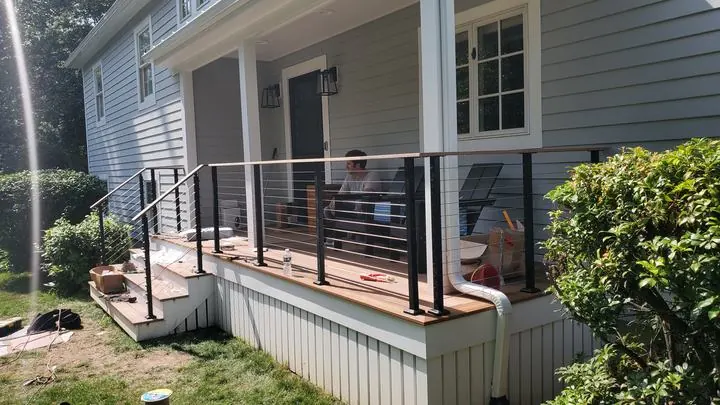
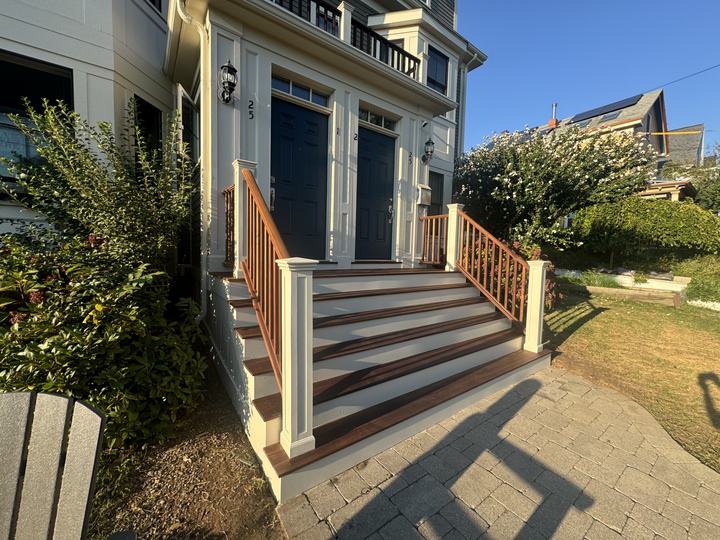
- A deck or porch with no flashing at the house, thin posts or railings that move. See my deck permit guide.
- A second kitchen or a second set of meters in a house listed as a single-family. That points to an illegal unit.
- Newer drywall and trim in an old house, with a panel full of mismatched breakers.
A tell is not proof. The permit record is how you find out.
How do I look up a house's permit history?
Permit records are public, and all you need is the address. Each city does it a little differently:
| City | Where to look | The catch |
|---|---|---|
| Somerville | Search by address in the City's Citizenserve portal, or in the open data set of permit applications. See my portal guide. | Online records start in 2014. For older work, ask ISD, 1 Franey Road, (617) 625-6600 ext. 5600. |
| Boston | The City's Permit Finder for current applications. Historical records can be searched by address or requested in person at ISD, 1010 Massachusetts Avenue, 5th floor. | Plans can only be viewed in person, and older records can be incomplete. ISD: 617-635-5300. See my Boston permit guide. |
| Cambridge | The online Permit Finder, plus the ISD record room at 831 Massachusetts Avenue for permits, plans and certificates of occupancy. | Record room access is by request. See my Cambridge permit guide. |
| Other towns | Call the building department and ask for permits and certificates on the address. | Some towns still keep older records on paper only. |
Two limits. First, an online search can miss older or paper records, so a quiet result is not a clean bill of health. Second, a permit in the file only tells you someone applied. It matters whether the permit was closed with a final inspection.
What should I check before I make an offer?
Your inspection window after an accepted offer is short. Do the records check before you offer, or the same day your offer is accepted. Here is the checklist I give buyers:
| Check | What you're looking for | Who does it |
|---|---|---|
| 1. Permit history | Permits for the kitchen, baths, basement, electrical, plumbing, roof and any addition | You, or your agent or contractor |
| 2. Open permits | Any permit with no final inspection or still shown as open | You, then the building department |
| 3. Records vs. the house | Finished space, baths or units that don't appear in any permit | You and a licensed contractor |
| 4. Certificate of occupancy | A CO or certificate of completion for any added unit or addition. See my certificate of occupancy guide. | Building department |
| 5. Unit count | Is it a legal one-, two- or three-family, and does the use match the listing? | You, the assessor's record and zoning |
| 6. Behind the walls | Panel work, plumbing and framing in finished areas that a general inspector can't see through drywall | Home inspector, plus a licensed electrician or plumber |
| 7. Direct questions | Ask the seller in writing: who did the work, when, and were permits pulled? | You or your agent |
| 8. Your lender | Ask whether open or missing permits would affect your loan | You and your loan officer |
On lenders, I could not find one Massachusetts rule that covers open permits. A 2014 Massachusetts Realtors legal hotline note says many banks have the appraiser check whether permits were pulled, though practice may have changed, so ask your own lender early. Your attorney is the right person to ask about contract language.
What if I find unpermitted work before closing?
You have more leverage now than you will ever have again. Your options, roughly from lightest to heaviest:
- Ask the seller to permit it and close it out before closing. This works best for smaller items like a bath or a deck. Ask for the final sign-offs, not just an application.
- Negotiate the price or a credit. Get a licensed contractor to walk the house first, so the number comes from a real scope and not a guess.
- Change the plan. A basement "apartment" with no certificate of occupancy is an illegal unit, not a rental you can count on. See my basement apartment rules.
- Walk away. If the seller won't engage and the scope is unknown, that is a legitimate answer.
I walk houses with buyers during the inspection period and send a written line-item budget they can use in the negotiation. For the full pre-offer routine on an older house, I wrote Buying an Old House in Somerville, and my free old-house buying checklist covers the basics.
I found it after closing. What's my action plan?
Take a breath. In the jobs I have seen, most of these cases end with a permit, some inspections and a repair list, not with a court date. A sensible order:
| When | What to do |
|---|---|
| This week | Stop adding work to the area. Photograph everything. Keep the closing papers, listing, inspection report and any messages with the seller. Pull the permit history. |
| Weeks 1 to 2 | Have a licensed contractor walk the space and list what looks wrong or hidden. Safety items such as wiring, gas appliances and bedroom exits come first, and anything electrical or gas needs a licensed pro. |
| Weeks 2 to 4 | Talk to a Massachusetts real estate attorney about whether you have any claim against the seller. I'm a builder, not a lawyer. Then call the building department for a plain conversation about the path. |
| Months 1 to 3 | File the permit, open what the inspector asks to see, fix what fails, and call for finals. |
| After | Confirm the permit shows closed and keep the certificate with your house records. |
The timeline is my estimate from jobs I've seen. It depends on the city, the scope and the inspector's schedule.
Calling the building department on your own can feel risky. In my experience, an owner who comes in early with photos and a licensed contractor already lined up gets a calmer conversation than one reacting to a complaint. A later permit for even a small project, like a fence, can also draw attention to work that was never inspected.
How is unpermitted work fixed?
Unpermitted work can often get an "after the fact" permit. It is not guaranteed. In the worse cases, the building department can require removal of the work. Boston's Inspectional Services Department says that skipping a permit can mean paying double the permit fee and having to fix or remove the work.
What a building department typically asks for, based on the jobs I've handled:
- Drawings of what exists. Simple scaled plans of the room and the work, sometimes with an engineer's letter for structure.
- Permits for each trade. Electrical and plumbing permits are usually pulled by licensed tradespeople, and they will inspect their own work.
- Exposed work. Inspectors may want to see wiring, plumbing or framing that was drywalled over. Often that means a few targeted openings, not a gut.
- Corrections. Anything that fails gets fixed, and anything that can't be fixed may come out.
- The higher fee. Somerville's posted schedule charges three times the normal building permit fee for work done without a permit, as I wrote in my article on remodeling without a permit. Boston says double. Confirm with ISD, and see Somerville's permit fees for how the base fee works.
A bathroom or a deck is usually manageable. A converted basement unit with no egress, no separate heat or a ceiling that's too low may not be legalizable as an apartment, and zoning can add its own limits. Ask early.
What is the open or expired permit problem?
This one catches people who did everything "right." The seller, or the contractor before them, pulled a permit and never called for the final inspection. The record is still open years later.
The state building code, 780 CMR 105.5, says a permit becomes invalid if work doesn't start within 180 days of issuance, or if the authorized work is suspended or abandoned for 180 days. The building official can grant written extensions of up to 180 days each, but you have to ask in writing before the 180 days run out. The version I read on Cornell's Legal Information Institute shows an amendment effective October 11, 2024.
The catch is what an expired permit does not do. It does not erase the record. A 2024 local news report from Wareham described a buyer's lender refusing to approve a mortgage because of a years-old, never-closed water heater permit. The town said it would not inspect work under expired permits, so the old permit stayed open. Practice differs by town.
If you find an open permit on a house you're buying:
- Ask the building department what exactly is open and who the permit holder was.
- Ask what they require to close it. It might be a final inspection, or a new permit for the same work.
- Have a licensed contractor or tradesperson look at the work. A permit for a bathroom might be sitting open with a missing plumbing final.
- Get it closed, or have the seller close it, before you close.
If you already own the house, my Somerville permit guide and the "do I need a permit" guide show how to do the next project cleanly, with the final sign-off called every time.
Want a second set of eyes before you buy?
I'm Mateus, a licensed Construction Supervisor in Davis Square. Since 2020 I've renovated and managed over $5 million in projects around Somerville and Greater Boston, and I regularly clean up work other people skipped permits on. If you're about to make an offer, or you've just found something at your new house, book a free walkthrough. We'll go through the records and the house together and I'll send a written budget for what it takes to make it right.
Frequently asked questions
Who is responsible for unpermitted work when I buy a house in Massachusetts?
In practice, the buyer inherits it. Massachusetts is a buyer-beware state, sellers have only a few required disclosures such as lead paint and septic information, and the new owner takes the house along with its permit history. Sellers must answer direct questions truthfully, so ask in writing.
How do I check if a house has permits in Somerville, Boston or Cambridge?
Search the address with the city. Somerville has the Citizenserve portal and an open data set that starts in 2014, and older records come from ISD. Boston has the Permit Finder and a historical records search, and Cambridge has an online Permit Finder plus an ISD record room. Online searches can miss older paper records.
Can the city make me tear out work the previous owner did without a permit?
It can require you to fix or remove it. Boston's ISD says unpermitted work can mean paying double the permit fee and fixing or removing the work. Many cases end with an after-the-fact permit, inspections and repairs, but it depends on the work and the inspector.
Does a building permit expire in Massachusetts?
Under 780 CMR 105.5, a permit becomes invalid if work doesn't start within 180 days of issuance or is suspended or abandoned for 180 days. The building official can grant written extensions of up to 180 days, requested before the 180 days end. An expired permit can still show as open in the town's records.
Will an open or missing permit affect my mortgage?
It can. A 2014 Massachusetts Realtors legal hotline note says many banks have the appraiser verify permits, and a 2024 local report described a lender refusing a loan over an old open permit. I could not find one statewide lender rule, so ask your lender early and have your attorney review the contract.
Should I buy a house with an unpermitted finished basement?
It depends on the price, the scope and your plans. A finished basement used as a rec room may be fixable with a permit and inspections. A basement apartment without a certificate of occupancy is an illegal unit, so don't count on rent from it. Get a licensed contractor to walk it before you decide.
See the towns I work in, with local permit notes, and how I price work.
Read this next
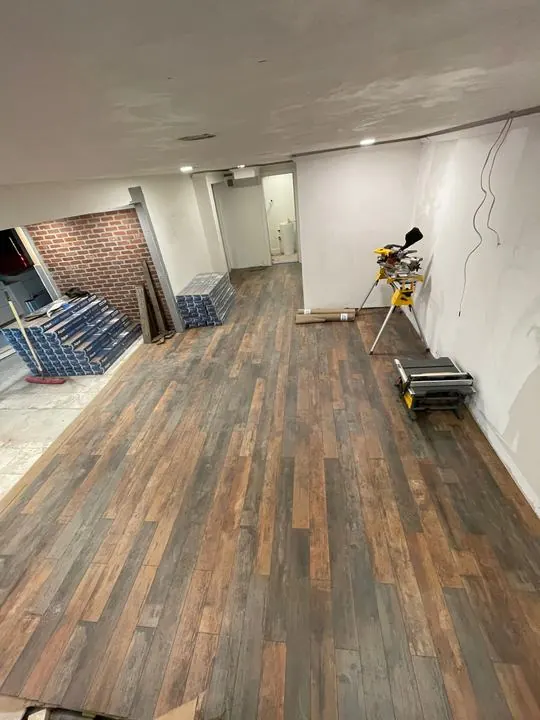 Permits & RulesWhat Happens If You Remodel Without a Permit in Massachusetts?What happens if you remodel without a permit in Somerville or elsewhere in Massachusetts: stop-work orders, triple fees, opened walls, how to fix it.4 min read · Keep reading →
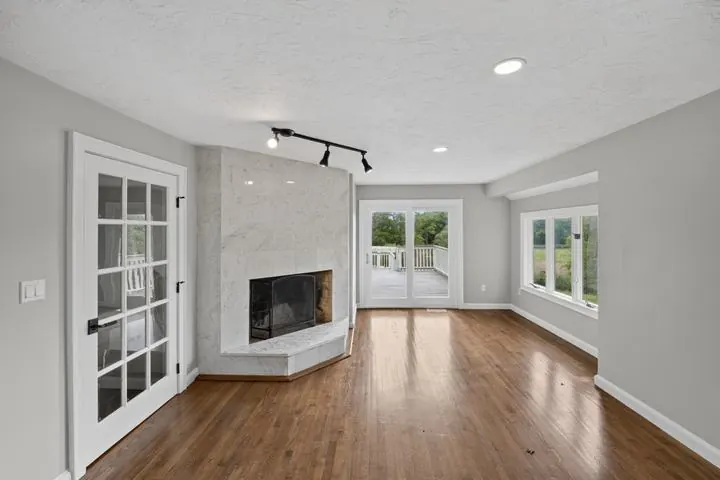 Permits & RulesCertificate of Occupancy in Somerville, MA: What It Is and When You Need OneA certificate of occupancy in Somerville MA: what it is, when the City requires one, final inspections, open permits, and how to check permit history.4 min read · Keep reading →
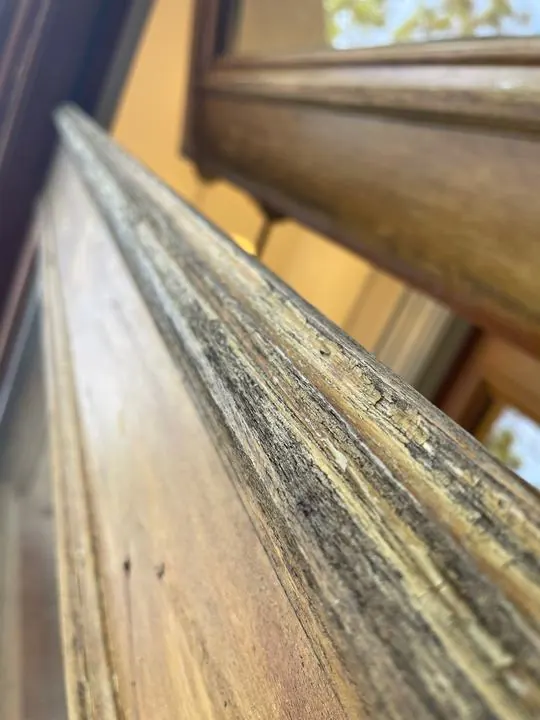 Hiring & PlanningBuying an old house that needs work: a Somerville, Cambridge and Medford checklistBuying an old house that needs work in Somerville, Cambridge or Medford? My builder's checklist: what to inspect, lead and permit lookups, how to budget.4 min read · Keep reading →
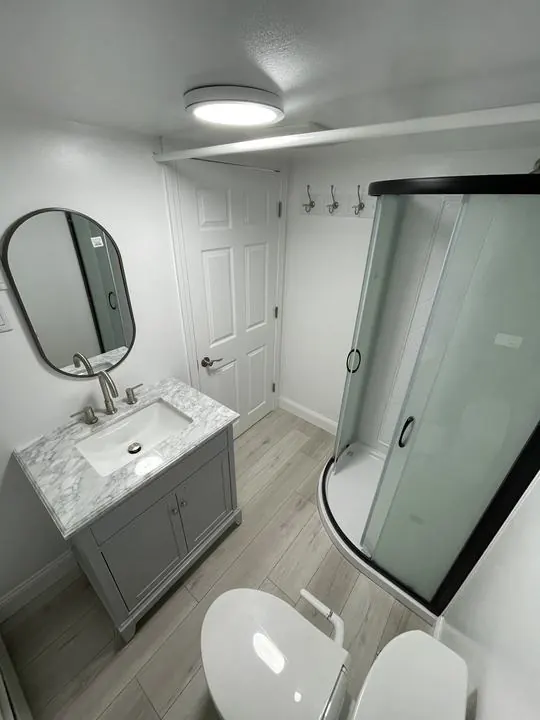 Permits & RulesMassachusetts Basement Apartment Laws: What Makes a Basement Unit LegalMassachusetts basement apartment laws explained: ceiling height, egress, fire separation, alarms, the ADU law and how Somerville owners convert legally.4 min read · Keep reading →
 Permits & RulesSomerville building permit portal: how to apply, pay, track and search permitsSomerville building permit portal guide: apply on Citizenserve, upload the right PDFs, pay, track status, book inspections and search permits by address.4 min read · Keep reading →
 Permits & RulesBoston building permit guide: short form vs long form, fees, lookup and inspectionsBoston building permit guide: short form vs long form, ISD fees, the online portal, permit lookup by address, zoning review and inspections in Boston, MA.4 min read · Keep reading →
Mateus Magno founded Magno & Co in 2020. He is a licensed Massachusetts Construction Supervisor (CS-123658), registered Home Improvement Contractor (HIC #220484) and certified Lead-Safe Renovator Supervisor who has renovated and managed over $5 million in projects across Greater Boston.
More about Mateus →