







Basement Bathroom Cost in Greater Boston: Why It Runs Higher Than a Remodel
What drives basement bathroom cost in Somerville and Greater Boston: cutting the slab, ejector pumps, venting, moisture and permits, plus how it compares.
 Mateus Magno
Licensed Construction Supervisor · November 2, 2026 · 4 min read
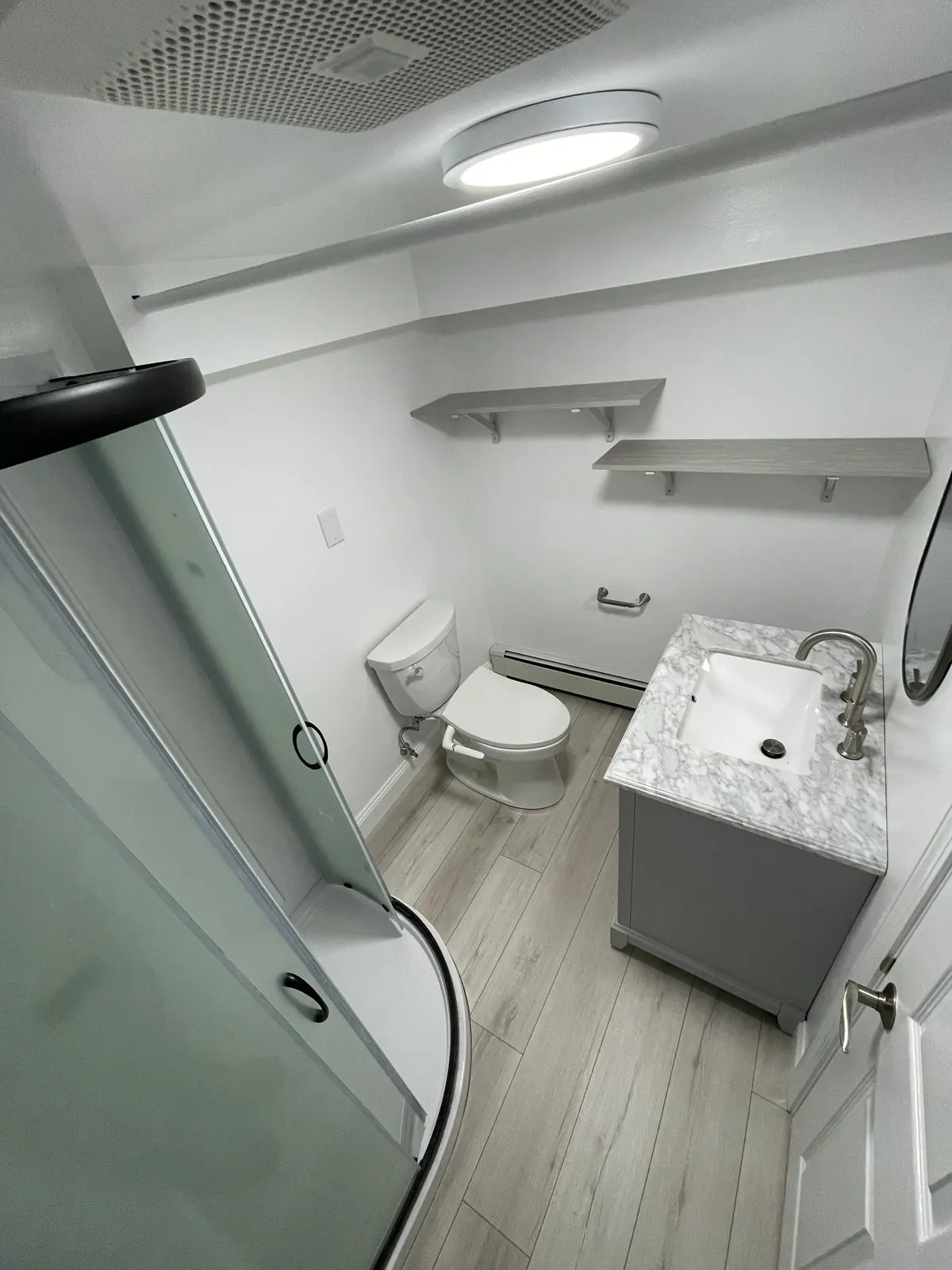
A basement bathroom is new construction, not a remodel, so it usually costs more than even a full gut renovation of an existing bath. The big drivers are breaking the slab for drains, a sewage ejector or up-flush system if the drain is too high, a code-compliant vent, and moisture control. For an outside benchmark, the 2025 Cost vs. Value report puts a midrange bathroom addition in Boston at $64,220; every basement is different, so I price yours from a free walkthrough.
Most people searching basement bathroom cost expect a number close to a normal bathroom remodel. In a Somerville or Cambridge basement, it is usually more, because you are building a bathroom where no plumbing, venting or finished walls exist yet. Below is what actually drives the price, and how it compares to what my clients pay for a regular bathroom.
Basement bathroom cost: the short answer
A new basement bath is a new-construction project. It usually lands beyond the range of a full gut renovation of an existing bathroom, because it adds work a remodel never needs: concrete cutting, new below-grade drains, often a pump, and a brand-new vent run.
For an outside comparison, the 2025 Cost vs. Value report for Boston lists a midrange bathroom addition at $64,220. A basement bath is not the same job, but it is closer to an addition than to a refresh. Every basement is different, so I don't quote a number until I've seen the slab, the main drain and the ceiling height.
Why a basement bath costs more than a remodel
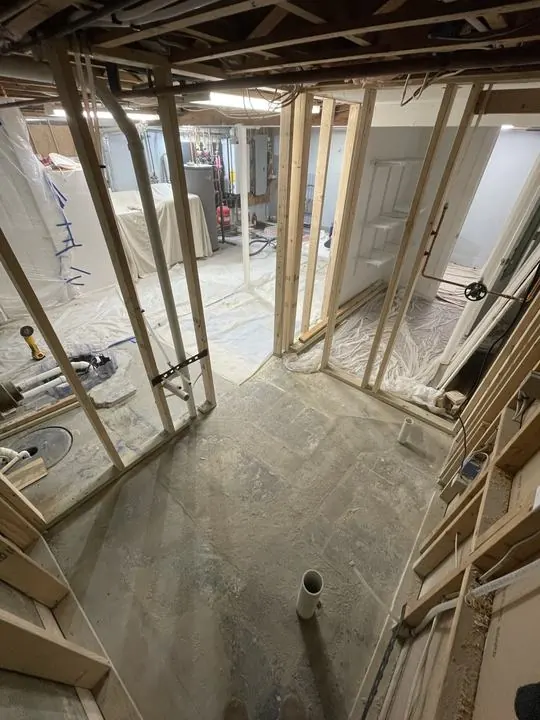
- Breaking the slab. The toilet and shower drains have to be trenched into the concrete floor, pitched to the main drain, inspected, then patched.
- Drain height. In many 1900-1930 houses the main sewer line leaves the foundation above the basement floor, so gravity can't do the job and you need a pump.
- Venting. Every fixture needs a vent that ties into the house system, which means opening walls or ceilings above.
- Moisture. Old fieldstone and brick foundations in Somerville often sweat or leak, and that has to be handled before any finish goes on.
- Ceiling height and obstacles. Beams, ducts and pipes may need to be moved to meet the code's minimum ceiling heights.
- New electrical and exhaust. New circuits, GFCI protection, lighting and a fan ducted to the outside.
Basement bathroom plumbing cost: gravity, ejector or up-flush
The single biggest swing in basement bathroom plumbing cost is whether the new drains can flow by gravity. Here is what the Massachusetts plumbing code (248 CMR 10.00) says when they can't:
- Drains that can't reach the sewer by gravity must go into a tightly covered and vented sump, then get pumped up into the building's gravity drain (248 CMR 10.15(9)).
- In a single-family home, an ejector sump that takes a toilet needs a sewage ejector pump of at least 20 gallons per minute.
- The pump discharge needs an accessible check (or backwater) valve and a full-port shutoff valve, and it has to connect to the drain system on its own.
- A macerating (up-flush) toilet system must be product-accepted by the state plumbing board, installed per the manufacturer, with at least a 3/4-inch discharge.
An up-flush system can mean less concrete work, while a full ejector pit handles a shower and sink more comfortably. Your plumber and I pick based on your drain height and how the bath will be used.
Venting: no easy shortcut in Massachusetts
In some states a plumber can cap a vent with an air admittance valve and move on. Under 248 CMR 10.16, those valves are not permitted without special permission from the Board. The sump itself also needs a properly sized vent.
In practice that means running a real vent up to an existing stack or through the roof. In a two-family or triple-decker, that pipe often passes through an upstairs unit, so planning the route early saves a lot of opened walls.
Moisture, ceiling height and egress
- Moisture first. Fix grading, gutters and any water coming in before framing. A bathroom adds humidity to a space that may already be damp.
- Measure the ceiling. The building code sets minimum heights for bathrooms and at the shower head. Low beams and ducts are the usual problem.
- Egress if a bedroom is nearby. If the bath serves a new basement bedroom, that bedroom needs an emergency escape opening. See my guide to egress window requirements in Massachusetts, and if you're thinking of a rentable unit, read basement apartment rules first.
Permits for a basement bathroom in Somerville
A basement bath needs more than one permit. According to the Somerville Building Division:
- An owner who lives in a one- or two-family home may pull the building permit; three-family and larger buildings need a licensed contractor.
- Plumbing and electrical permits must be pulled by a licensed plumber and a licensed electrician. Owners can't pull those.
- Applications go through the City's Citizenserve online portal.
My Somerville building permit guide walks through the steps.
How it compares to my bathroom price levels
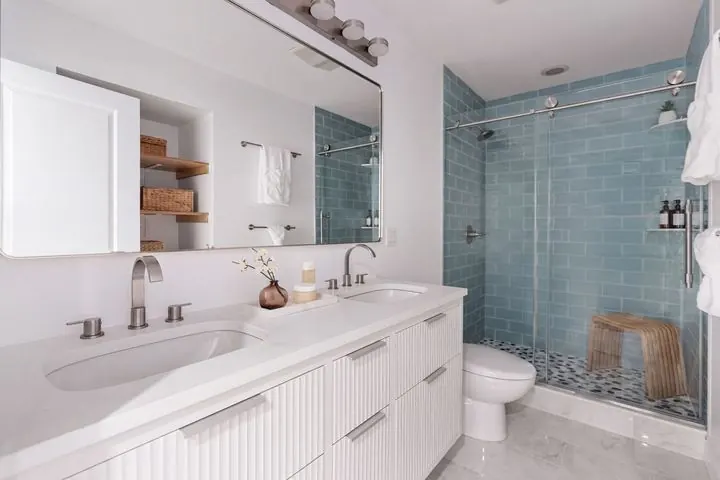
For context, here is what my clients typically pay with Magno & Co to renovate an existing standard-size Greater Boston bathroom (about 5x8 to 8x10). Larger rooms, layout changes, rot repairs, lead-safe work in pre-1978 homes and high-end finishes cost more, and the exact price always comes from a free walkthrough and a written line-item budget.
| Level | Typical price |
|---|---|
| 1. Bathroom refresh | $5,000 - $12,000 |
| 2. Mid-level renovation | $12,000 - $18,000 |
| 3. Full renovation (gut to the studs) | $19,000 - $30,000 |
| Beyond a full renovation | $30,000+ |
A new basement bath belongs in that last row or above it, because it's a new room, not a renovated one.
Need a hand?
If you're weighing a basement bathroom in Somerville, Cambridge or Medford, book a free walkthrough. I'll check the drain height, venting route and moisture, then send a written line-item budget, usually within 48 hours.
Frequently asked questions
How much does it cost to put a bathroom in a basement?
It depends on the drain height, slab, venting and moisture, and it usually costs more than a full remodel of an existing bath. As an outside benchmark, the 2025 Cost vs. Value report lists a midrange Boston bathroom addition at $64,220.
Do you need a sewage ejector pump for a basement bathroom?
Only if the fixtures sit below the level where the drain can flow to the sewer by gravity. Massachusetts code then requires a covered, vented sump with a pump, or a board-accepted macerating system.
Can I use an up-flush toilet in a basement in Massachusetts?
Yes, if the macerating system is product-accepted by the state plumbing board, installed per the manufacturer's instructions, and has at least a 3/4-inch discharge.
Do I need a permit to add a bathroom in my basement?
Yes. In Somerville you need a building permit, and the plumbing and electrical permits must be pulled by a licensed plumber and electrician.
Planning a bathroom? See how I remodel bathrooms in Somerville and my published prices.
Mateus Magno founded Magno & Co in 2020. He is a licensed Massachusetts Construction Supervisor (CS-123658), registered Home Improvement Contractor (HIC #220484) and certified Lead-Safe Renovator Supervisor who has renovated and managed over $5 million in projects across Greater Boston.
More about Mateus →