





Massachusetts radon testing: how to test, what the levels mean and how mitigation works
Massachusetts radon testing made simple: when to test, what 4 pCi/L means, and how mitigation works before finishing a basement in Somerville or Cambridge.
 Mateus Magno
Licensed Construction Supervisor · November 2, 2026 · 4 min read
The Massachusetts Department of Public Health recommends testing every home for radon, ideally between November 1 and March 31 on the lowest lived-in level. If a long-term test or the average of two short-term tests shows 4 pCi/L or more, EPA recommends fixing it, usually with a sub-slab depressurization system.
Massachusetts radon testing is cheap, quick and the only way to know your level. The Massachusetts Department of Public Health recommends that all homes be tested, and says homes with high radon are found in every county in the state. If your result is 4 pCi/L or higher, EPA recommends fixing it.
I always bring this up before a basement project in Somerville or Cambridge. Here's how to test, what the numbers mean and how a mitigation system works.
Why radon matters
Radon is a radioactive gas that comes from soil and rock. You can't see, smell or taste it, and it can build up inside a house. According to EPA estimates, radon is the number one cause of lung cancer among non-smokers and is linked to about 21,000 lung cancer deaths a year in the U.S.
The state's radon testing page is blunt: any home can have a radon problem, no matter the foundation type. That includes the stone and brick foundations under many 1900 to 1930 triple-deckers in Greater Boston.
Radon levels: what the numbers mean
Radon is measured in picocuries per liter of air (pCi/L). Per EPA's action level page:
| Level | What it means |
|---|---|
| About 0.4 pCi/L | Typical outdoor air |
| About 1.3 pCi/L | Average indoor level in U.S. homes |
| 2 to 4 pCi/L | Consider fixing; there is no known safe level |
| 4 pCi/L or more | EPA's action level: fix the home |
EPA's Consumer's Guide to Radon Reduction says the trigger is one long-term test, or the average of two short-term tests, at 4 pCi/L or higher. A short-term test runs 2 to 90 days; a long-term test runs more than 90 days.
How to do Massachusetts radon testing right
You have two options, per the state: buy a short-term test kit online or at a hardware store, or hire a measurement specialist certified by the National Radon Safety Board (NRSB) or the AARST National Radon Proficiency Program (NRPP). Note that the state's Radon Unit no longer gives out free kits to the general public.
The state's tips for an accurate test:
- Test between November 1 and March 31. Levels are usually higher in winter. If you tested in summer, test again.
- For a 2- or 3-day test, close windows and outside doors 12 hours before and keep them closed as much as you can.
- Place the kit on the lowest level where people spend time, at least 20 inches off the floor.
- Keep it away from drafts, heat and humidity. Not in a kitchen, laundry room, bathroom or closet.
- Skip testing during storms, high winds or unseasonably warm weather.
- Mail it to the lab promptly and write down the kit ID.
Questions go to the state's radon line at 800-723-6695 (toll-free in Massachusetts).
Test before you finish a basement
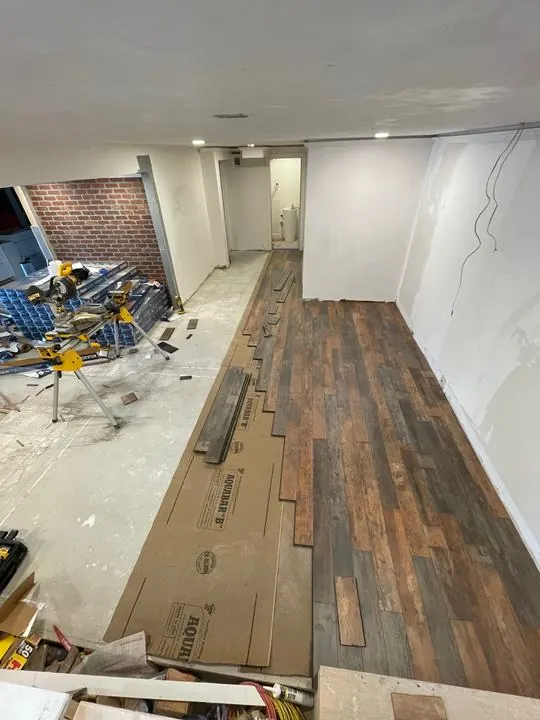
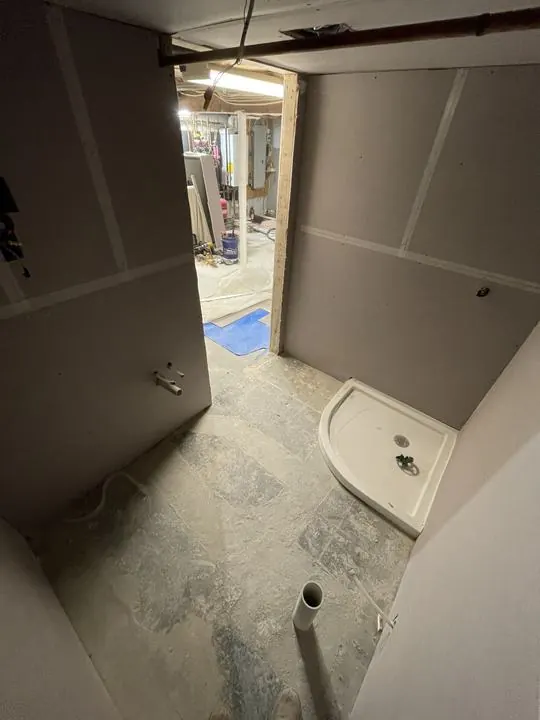
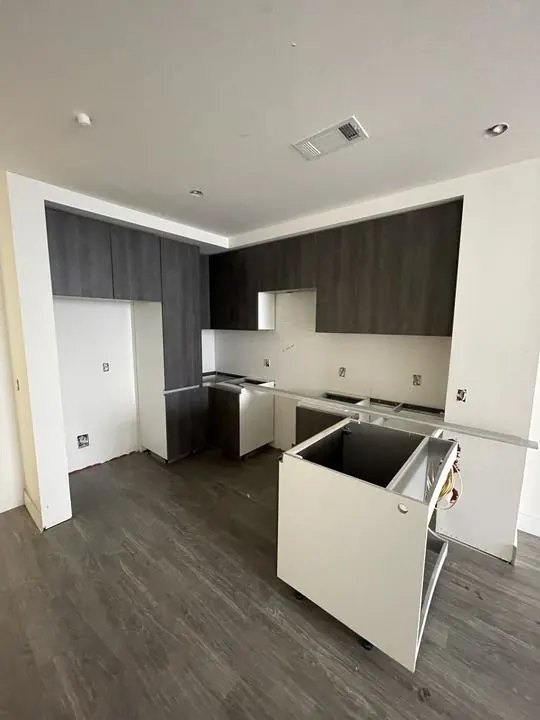
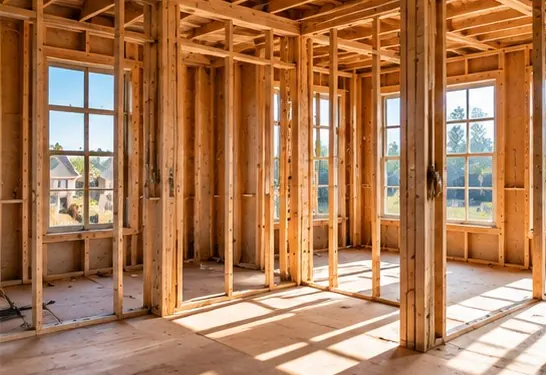
This is where I come in. Once a basement has drywall, flooring and a ceiling, running a radon pipe gets harder and uglier. So when a client in Davis Square or East Somerville asks me to finish a basement, I ask for a radon result first. If a system is needed, we plan the pipe route, fan location and electrical before the framing goes up.
EPA's guide also says that if you convert an unfinished basement after a system is in, you should ask your radon contractor how the change affects the system, then retest the lowest lived-in area when the work is done. If you are thinking about a legal basement unit, my basement apartment rules guide covers the code side.
How radon mitigation works
EPA's guide calls sub-slab depressurization (active subslab suction) the most common and usually the most reliable method. Here's the idea:
- One or more pipes go through the basement slab into the soil or crushed stone below. Often one suction point is enough.
- A radon fan pulls the gas out from under the slab and creates a slight vacuum there.
- The pipe vents above the roof, away from windows and doors.
- The fan sits in unconditioned space like an attic or outside, never in or below a living area.
- A warning device, usually a manometer, shows the system is working.
EPA lists a typical reduction of 50 to 99 percent for this method. Sealing cracks helps, but EPA does not recommend sealing alone. The fan must run all the time, and fans often last five years or more.
After installation, EPA says to test again within 30 days, but no sooner than 24 hours after the fan starts. The state recommends retesting a system every year or two.
What radon mitigation costs
EPA says most homes can be fixed for about the same cost as other common home repairs. For a dollar figure, HomeGuide's 2026 national average is $1,200 to $2,000 installed for an active soil depressurization system. That is a national number; Greater Boston usually runs higher, and old stone foundations or a finished basement can add work. The state's contractor checklist suggests getting more than one estimate and asking for before-and-after results from past jobs.
Need a hand?
I plan basement projects in Somerville, Cambridge, Medford and across Greater Boston with radon, moisture and code mapped out first. Book a free walkthrough and I'll send a written line-item budget, usually within 48 hours.
Frequently asked questions
What is a safe radon level in Massachusetts?
EPA says there is no known safe level, but it recommends fixing your home at 4 pCi/L or more and considering a fix between 2 and 4 pCi/L. Massachusetts uses the same guidance.
Does Massachusetts give out free radon test kits?
Not anymore. The state's Radon Unit says it no longer offers free kits to the general public; you can buy a short-term kit online or at a hardware store.
When is the best time to test for radon in Massachusetts?
The state recommends testing between November 1 and March 31, when levels are usually higher. Retest if your first test was done in summer.
How much does radon mitigation cost?
HomeGuide's 2026 national average is $1,200 to $2,000 installed for an active soil depressurization system. Greater Boston usually runs higher.
Planning work on your home? See everything I do, how I price work and the towns I work in.
Mateus Magno founded Magno & Co in 2020. He is a licensed Massachusetts Construction Supervisor (CS-123658), registered Home Improvement Contractor (HIC #220484) and certified Lead-Safe Renovator Supervisor who has renovated and managed over $5 million in projects across Greater Boston.
More about Mateus →