





All-electric affordable housing in Massachusetts: why the power bill matters so much
One Cambridge project's power estimate rose from $1,500 to $2,300 per unit, cutting its debt capacity by $1.5M+. All-electric costs in Massachusetts explained.
 Mateus Magno
Licensed Construction Supervisor · November 2, 2026 · 3 min read
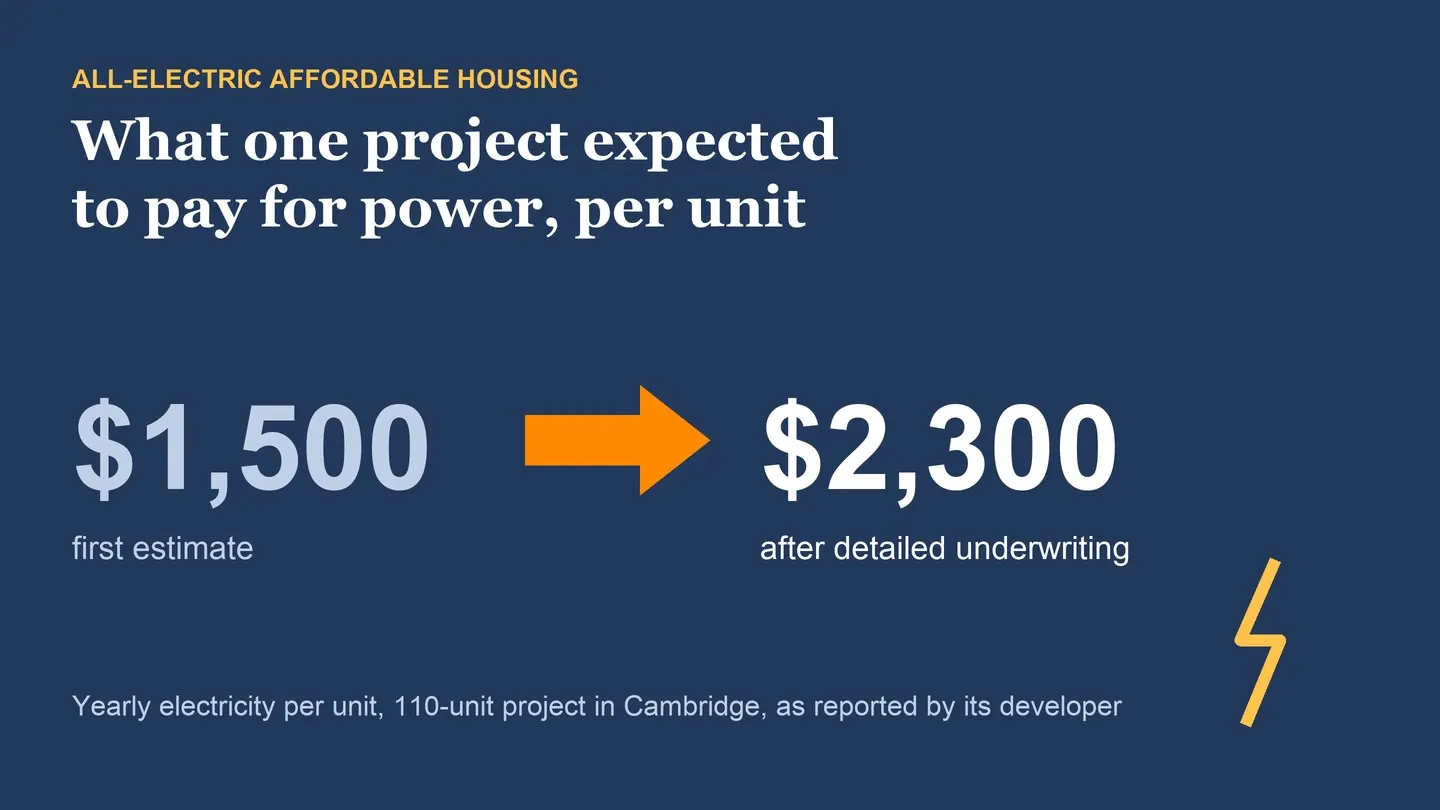
All-electric rules can make affordable housing harder to finance because electric bills affect how much debt a project can carry. In a Banker & Tradesman column, the head of B'nai B'rith Housing says the power estimate for a 110-unit Cambridge project rose from about $1,500 to about $2,300 per unit a year, cutting the debt it could support by over $1.5 million.
Boston and Cambridge require new multifamily buildings to be all-electric. Those buildings are cleaner to run, but the bills can be a real problem for affordable housing. Susan Gittelman, executive director of the nonprofit developer B'nai B'rith Housing, laid out the issue in a Banker & Tradesman opinion column on October 25, 2026.
It's one developer's view, so keep that in mind. But her numbers are specific, and they matter well beyond one project.
The number that changed: $1,500 to $2,300 per unit
Her example is a 110-unit building at 99 Blanchard Road in Cambridge. The first estimate for electricity was about $1,500 per unit each year. Closer review pushed it to about $2,300.
By my math, that's about $800 more per unit, or about $88,000 a year across the building. Gittelman says the change cut the debt the project could support by over $1.5 million. Lenders look at what a building earns after expenses, so a higher expense means a smaller loan. In affordable housing, rents are limited, so the owner can't just raise them to cover it.
Why electricity costs so much in Massachusetts
- The column says Massachusetts electric rates are more than double the national average and third-highest in the country, behind Hawaii and California.
- About half the state's electricity comes from natural gas, whose price swings.
- Low-income residents can get discounted electric rates, but affordable housing owners generally can't. The column cites an estimate that the Boston Housing Authority could save $11.5 million a year if it qualified.
- Construction adds its own costs, including oversized transformers and utility charges for upgrading local infrastructure.
What could help
The column isn't all bad news, and the "there's hope" part is worth reading. Ideas it mentions include tighter building envelopes, digital building controls, solar and better batteries, though batteries can't yet carry a building through peak periods. A state energy bill was also in conference committee when the column ran. The state Department of Energy Resources is collecting real operating data too, but most of these buildings have only one or two years of history.
What are the rules in Somerville?
Somerville's rule is a little different from the one the column describes for Boston and Cambridge. The city adopted the state's Specialized Stretch Energy Code, in effect since July 1, 2023. As reported at the time, new construction must be all-electric or wired so it can go all-electric later. Stretch code efficiency rules can also apply to major renovations. Check your own project with the City before you design it.
What this means for homeowners
You're not financing a 110-unit building, but the same math applies at a smaller scale:
- Fix the envelope first. A heat pump costs less to run in a tight, insulated house. Start with Mass Save insulation rebates.
- Check the panel. Going electric can mean more amps. See my electrical panel upgrade cost guide.
- Price the operating cost too. Compare what a system costs to run, not only what it costs to install. My heat pump cost guide and heat pump water heater guide are good starting points.
- Building a backyard cottage? A backyard ADU is new construction, so ask early how the energy code applies.
Planning an electric upgrade?
I'm Mateus, a licensed builder based in Davis Square. Book a free walkthrough and I'll look at your house and send a written line-item budget, usually within 48 hours.
Frequently asked questions
Why does all-electric cost more for affordable housing?
According to a Banker & Tradesman column by a Massachusetts nonprofit developer, high electric rates raise operating costs. Rents are limited, so higher costs reduce the debt a project can support. Electrical infrastructure can also add construction costs.
Do Boston and Cambridge require all-electric new construction?
The column says Boston and Cambridge require new multifamily construction to be all-electric. Check with each city for details and exceptions on a specific project.
Does Somerville require all-electric new construction?
Somerville adopted the Specialized Stretch Energy Code, effective July 1, 2023. New construction must be all-electric or wired to allow a future move to all-electric.
How high are Massachusetts electric rates?
The column says they are more than double the national average and the third-highest in the country, behind Hawaii and California.
Planning work near Somerville? See the towns I work in, with local permit notes, and how I price work.
Mateus Magno founded Magno & Co in 2020. He is a licensed Massachusetts Construction Supervisor (CS-123658), registered Home Improvement Contractor (HIC #220484) and certified Lead-Safe Renovator Supervisor who has renovated and managed over $5 million in projects across Greater Boston.
More about Mateus →