



Hardwood floor refinishing cost: old oak and maple floors in Somerville and Cambridge
Hardwood floor refinishing cost for Somerville and Cambridge homes: sand vs screen and recoat, water vs oil finish, lead-safe rules and time away.
 Mateus Magno
Licensed Construction Supervisor · November 2, 2026 · 4 min read
A national cost guide puts a full sand and refinish at about $2 to $7 per square foot without stain and $3 to $8 with stain, and a screen, buff and recoat at about $2 to $5. Those are national averages; Greater Boston usually runs higher. In pre-1978 homes, sanding painted borders or stairs brings in lead-safe rules that add time and cost.
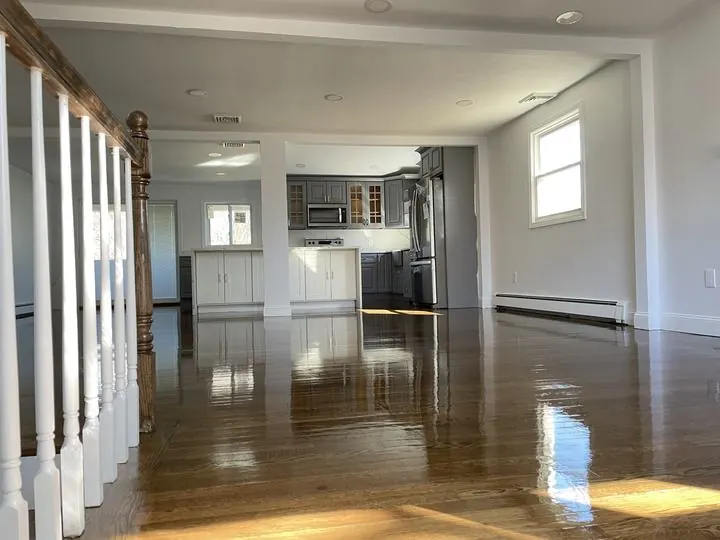
Hardwood floor refinishing cost is one of the best deals in home improvement. In Somerville and Cambridge, a lot of our 1900 to 1930 houses still have the original oak or maple under the rugs, and a good refinish can make a tired apartment look new for a fraction of the price of new flooring.
The short answer: national guides put a full sand and refinish at roughly $2 to $8 per square foot, and a lighter screen and recoat costs less. The real number for your house depends on the method, the finish, the condition of the wood, and whether any painted surfaces get sanded.
Hardwood floor refinishing cost: the national numbers
These figures come from HomeGuide's national cost guide. They are national averages. Greater Boston usually runs higher because of labor costs, tight access and older houses.
| Method (national average) | Per square foot |
|---|---|
| Sand and refinish, no stain | $2 to $7 |
| Sand, stain and refinish | $3 to $8 |
| Screen, buff and recoat | $2 to $5 |
| Stairs | $25 to $85 per step |
| Dustless sanding add-on | $2 to $4 extra |
The same guide puts a 400 sq ft job at about $800 to $3,200 on average. Many refinishers also have a minimum charge, so one small room can cost more per foot than a whole floor.
Sand and refinish vs. screen and recoat
- Sand and refinish: the old finish and a thin layer of wood come off, down to bare wood. This fixes deep scratches, gray worn paths and old stain. It is the only way to change the color.
- Screen and recoat: the floor is lightly abraded and gets a fresh coat of finish. No bare wood. It works only when the existing finish is still intact, just dull or lightly scuffed.
In my experience, many Somerville apartments are past the point of a recoat. If you see bare, gray wood in the traffic lanes, the finish is gone and a recoat will not bond well there.
Water-based vs. oil-based finish
This choice changes the look, the smell and how long you stay out. From what I see on my jobs:
- Oil-based polyurethane gives old oak a warm, amber tone that deepens over time. It smells strong and needs longer between coats.
- Water-based finish stays clearer, so maple and light oak keep their natural color. It dries faster and has much less odor, which matters in a triple-decker where neighbors share the hallway.
Neither is "better." Ask your refinisher which product they use, how many coats are in the price, and when you can walk on it and put rugs back.
How many times can a floor be sanded?
HomeGuide says solid hardwood can be refinished 4 to 10 times, depending on thickness and past sanding, and engineered floors fewer times. Old Somerville floors have often been sanded several times already. Before I recommend a full sand, I look for:
- Exposed nail heads or tongues showing at the board edges
- Thin spots near heat registers and doorways
- Patches where someone already replaced boards
If the wear layer is too thin, a screen and recoat or selective board replacement may be the smarter move.
Lead-safe rules for painted borders and stairs
This is where old houses get tricky. Many Somerville and Cambridge floors have painted borders around the edges, and many back stairs are painted. Sanding those surfaces is paint disturbance.
- Massachusetts requires a licensed lead-safe renovation contractor for paid work in pre-1978 housing that disturbs more than 6 square feet of painted surface per room inside, and a certified supervisor must be on site the whole time (Mass.gov).
- Under the federal rule, machine sanding of painted surfaces is prohibited unless the machine has a shroud or containment system with a HEPA vacuum attachment collecting dust at the source (EPA).
- The EPA RRP program requires anyone paid to disturb paint in homes built before 1978 to be certified and to use lead-safe work practices.
That means containment, HEPA equipment and careful cleanup, which add time and cost. I am a certified Lead-Safe Renovator Supervisor, and my lead paint guide explains what the process looks like.
How long you will be out of the house
HomeGuide puts a typical refinish at 2 to 6 days, depending on size, coats and drying time. On my jobs, the room has to be empty, and you cannot walk on it between coats. Plan for:
- A day to move furniture and protect the rest of the house
- Sanding and any board repairs
- Stain, if you want it, then finish coats with drying time in between
- Extra days before rugs and heavy furniture go back
If it is your only bedroom floor or the only path to the kitchen, plan to stay elsewhere. In Greater Boston, I like to schedule floors after all other trades are finished, so nobody scratches the new finish. That is why floors are often the last item on a kitchen remodel or a full renovation.
Need a hand?
Have old oak or maple floors in Somerville, Cambridge or Medford? Book a free walkthrough. I will check the wood, the paint and the layout, and send a written line-item budget, usually within 48 hours.
Frequently asked questions
How much does it cost to refinish hardwood floors?
A national cost guide puts a full sand and refinish at about $2 to $7 per square foot without stain and $3 to $8 with stain. Those are national averages, and Greater Boston usually runs higher.
Is it cheaper to screen and recoat or refinish hardwood floors?
Screen and recoat is the lighter, cheaper job, at about $2 to $5 per square foot nationally. It only works when the existing finish is intact; it will not fix deep scratches or bare, worn wood.
How many times can hardwood floors be refinished?
Solid hardwood can usually be refinished 4 to 10 times, depending on thickness and past sanding. Old floors may have been sanded several times already, so have the thickness checked first.
Do lead paint rules apply to refinishing floors?
They apply when painted surfaces are disturbed in pre-1978 homes, such as painted floor borders or stairs. In Massachusetts, disturbing more than 6 square feet of painted surface per room requires a licensed lead-safe renovation contractor.
Planning new floors? See how I do floors in Somerville and how I price work.
Mateus Magno founded Magno & Co in 2020. He is a licensed Massachusetts Construction Supervisor (CS-123658), registered Home Improvement Contractor (HIC #220484) and certified Lead-Safe Renovator Supervisor who has renovated and managed over $5 million in projects across Greater Boston.
More about Mateus →